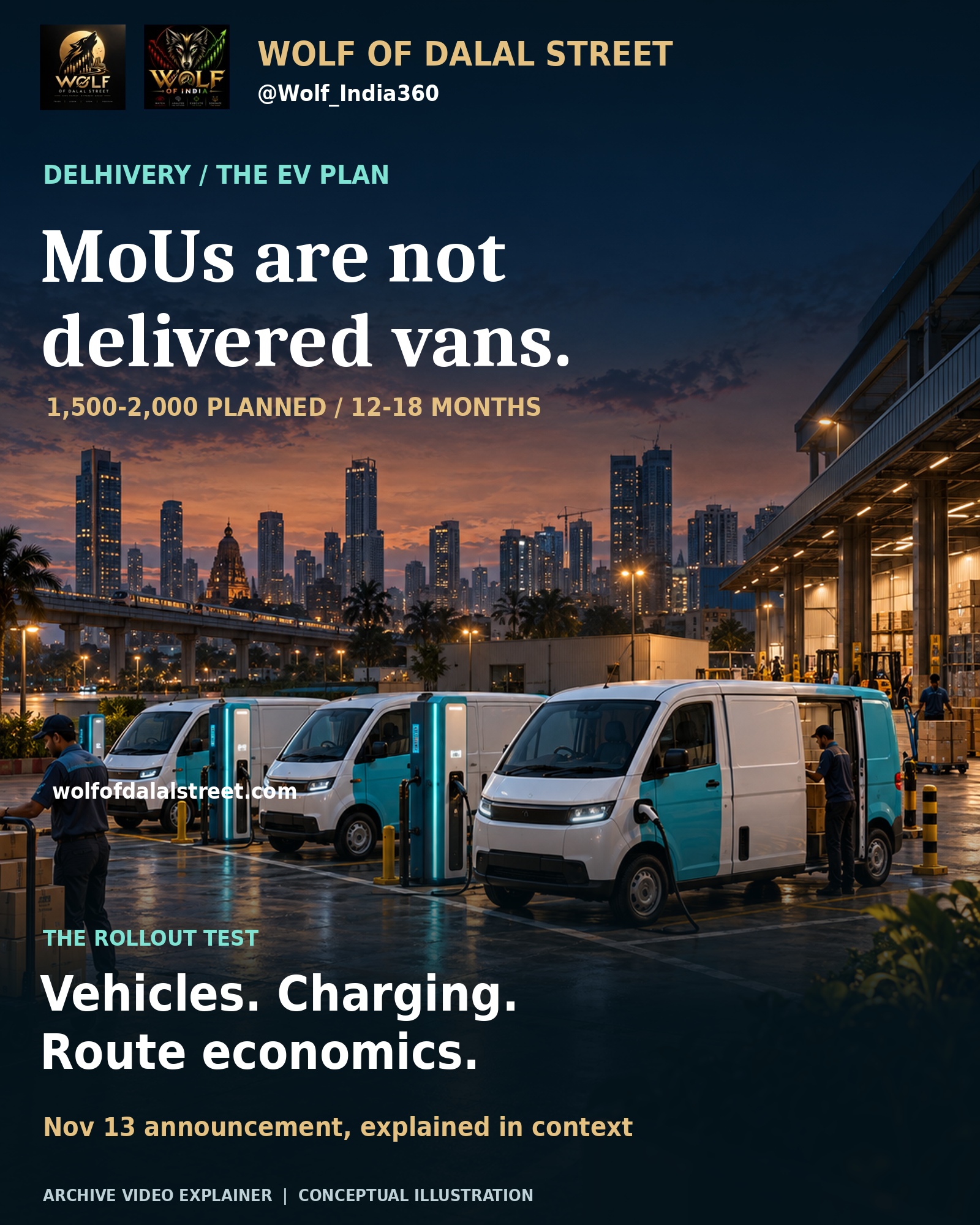
Delhivery’s electric-vehicle plan is a useful example of why an agreement, a deployment target and vehicles already operating are three different things. The company’s November 13, 2026 announcement describes memoranda of understanding with Tata Motors, Euler Motors and Montra Electric. It does not establish that 2,000 new vans have already been delivered.
This article expands our previously published November 16 video into a written guide. The figures below refer to that dated announcement, not a fresh fleet count or a new announcement on November 20.
The plan in numbers
- Initial deployment plan: 1,500-2,000 four-wheeler electric commercial vehicles over 12-18 months.
- Longer-term target: close to 5,000 electric commercial vehicles within three years.
- Relevant operations: eligible intra-city routes running under 200 km a day, not the entire national logistics fleet.
- Starting share: the company said EVs represented about 12-13% of its eligible intra-city fleet at the announcement.
- Share target: above 50% in two to three years, with full electrification of the sub-200 km fleet aimed for in four to five years.
Watch our original short explainer
The video below was published on our Wolf of Dalal Street channel on November 16, 2026. It is an archive explainer of the announced plan, not a live operational update.
What the partnerships cover
Delhivery names the Tata Intra EV in its Tata Motors collaboration and says Euler Motors’ Turbo City Plus will be the first vehicle deployed for smaller commercial applications. Its Montra Electric collaboration aims to expand EVIATOR deployments. The plan starts with urban deliveries and later extends to vehicles suited to heavier payloads.
These are the company’s deployment intentions. They should not be read as a completed purchase count, a supplier revenue forecast or confirmation that every vehicle is already earning money on a route.
The less visible part: vendor support
A vehicle needs more than a battery to stay productive. Delhivery describes advance payments for vendor partners, investment in charging and parking infrastructure, and charging pilots starting in Delhi-NCR. The stated support includes low-cost charging and free parking for vendor partners.
The business question is therefore route economics. Charging access, vehicle use, downtime and suitability for the load can affect whether a deployment works. Those are useful questions for evaluating progress, not independently verified savings estimates or claims that every route will cost less.
How to judge progress from here
Watch the number of vehicles actually deployed, the eligible fleet used as the denominator, locations covered and charging infrastructure put into operation. Compare later disclosures with the original timetable rather than treating a target as a result. Announced capacity and implementation evidence belong in separate columns.
No stock-price target or return promise follows from this plan. This is educational company and industry coverage, not investment advice. Wolf of Dalal Street is not a SEBI-registered investment adviser.
Follow our free coverage
For our public explainers, follow Wolf of Dalal Street on Telegram and our YouTube Shorts channel. These links are for free public content, not a payment or subscription request.
Recent Comments