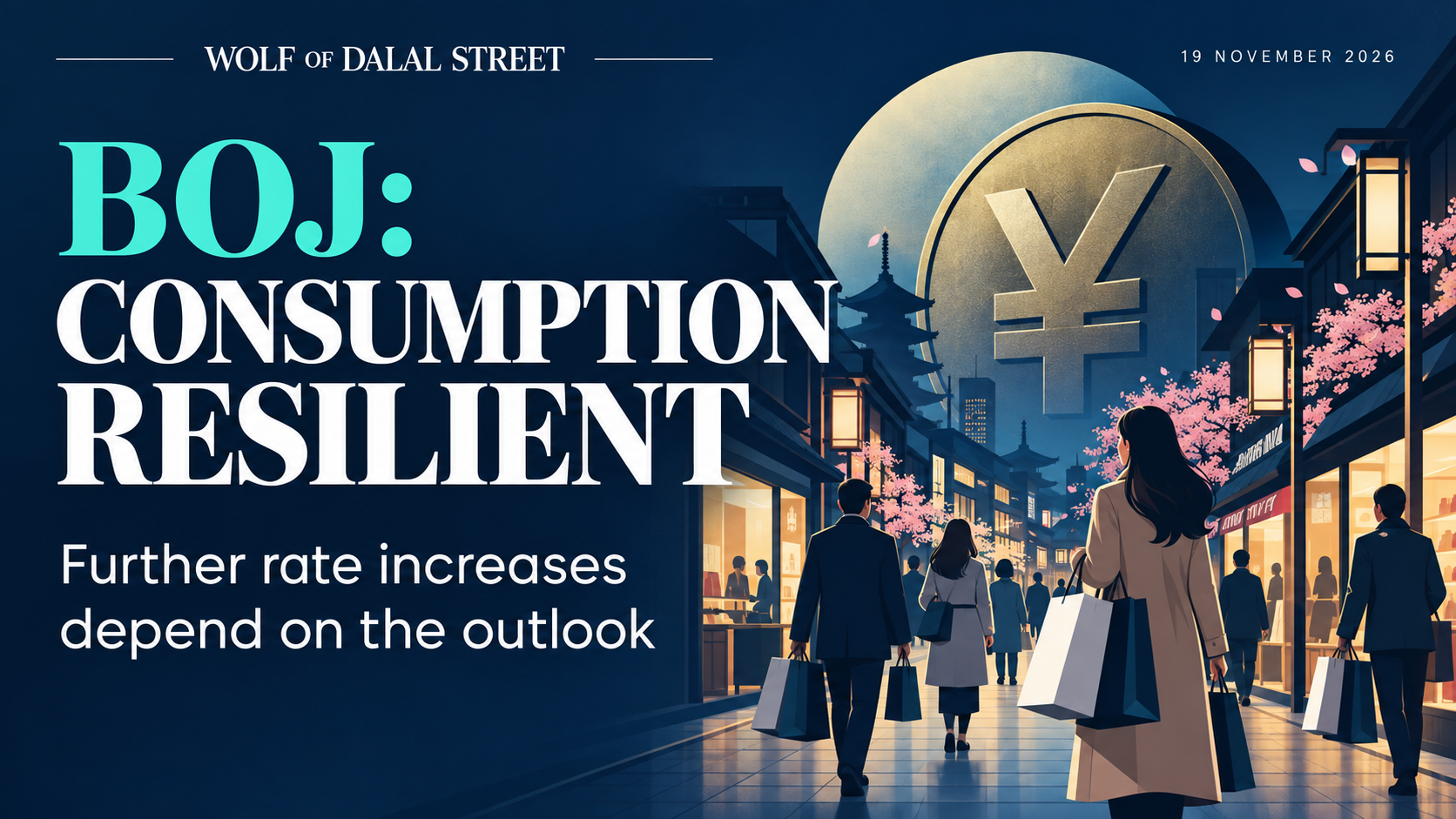
Bank of Japan Governor Kazuo Ueda has described Japanese household consumption as resilient while keeping further interest-rate increases conditional on the economic and inflation outlook. His November 19, 2026 parliamentary statement sets out a balancing act: support for spending from employment and income, against pressure from energy prices, imported goods and the yen.
This was an explanation of the central bank’s assessment and policy approach, not an announcement of a new rate increase. Ueda said the previous month’s policy meeting had maintained the guideline for the uncollateralized overnight call rate at around 1.25%.
Why weak quarterly spending did not overturn the assessment
In his prepared statement, Ueda linked resilient private consumption to improving employment and income, while acknowledging the burden of higher prices. Reuters separately reported his parliamentary comments that the fall in private spending in third-quarter GDP data was within the BOJ’s expectations and reflected living costs and bad weather.
The distinction is between a weak quarterly observation and the central bank’s view of the broader trend. Ueda’s assessment is that spending can return to a moderate upward path. That is an expectation, not a guarantee that the next GDP release will show a rebound.
The inflation problem has more than one layer
The prepared statement put recent consumer-price inflation excluding fresh food at around 2%. It also said underlying inflation was generally consistent with the 2% price-stability target. These are related assessments, but they should not be treated as identical measures.
Ueda warned that headline price pressures could intensify as crude oil, other import costs, earlier yen depreciation and AI-related demand feed through to goods prices. He also pointed to firms passing higher wages into selling prices and to the risk of inflation expectations rising above the target.
For households, that creates competing forces. Higher nominal income can support spending, but energy and imported-goods inflation can reduce what that income buys. The statement therefore does not amount to an all-clear on household finances.
What the rate guidance does, and does not, say
Ueda reiterated that the BOJ would continue raising the policy rate and adjusting monetary accommodation in response to economic activity, prices and financial conditions. He said timing and pace would depend on how the baseline outlook and its risks developed.
- The existing operating guideline cited in the statement is around 1.25%.
- Further increases remain the stated direction, subject to the outlook and risks.
- The November 19 statement does not announce a new rate, a hike size or a fixed date for the next move.
A forecast by an analyst about the next meeting is different from a BOJ decision. Readers should keep those categories separate rather than treating an expected move as something already agreed.
What to watch after the speech
The useful evidence will be the BOJ’s next formal policy decision and subsequent data on spending, wages and prices. Ueda also identified the Middle East situation, AI-related demand and exchange-rate developments as risks requiring attention.
For readers following global markets from India, this is a policy-watch item rather than a ready-made trading instruction. The speech alone cannot establish how the yen, Japanese equities or Indian markets will react.
This original explainer is based on the Bank of Japan’s November 19, 2026 parliamentary statement and Reuters’ account of Ueda’s remarks. It is educational information, not a buy or sell recommendation. We are not a SEBI-registered investment adviser.
Read more educational market explainers on our free English and Hindi news app: Wolf News.
Recent Comments